Are You a Same Talker?
Doug Boemler Wareing

Most brands think they’re connecting with their guests. Their guests disagree.
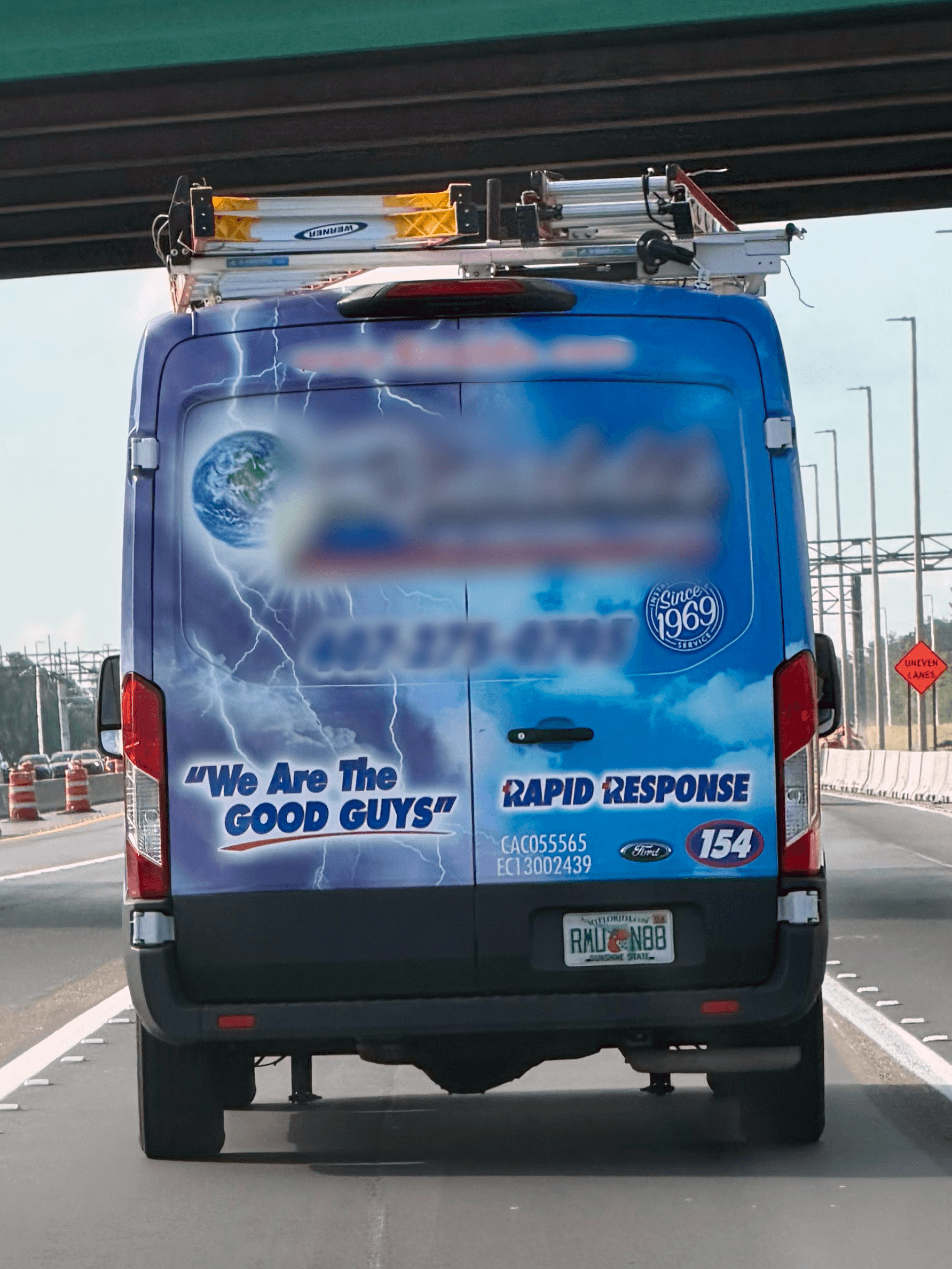
Wednesday morning on the Florida Turnpike, a van for an AC company moves over in front of me.
Fully vehicle wrapped. Bright graphics. Ladders on the roof. Phone number plastered across the doors. And there, almost as large as the company name, was printed:
"We Are The GOOD GUYS"
All caps "GOOD GUYS", underlined in red (just to make sure you knew it).
I thought about that van for the rest of the drive.
Not because it was unusual, but because it wasn't.
You've seen a version of it, wherever you live, for every category, every industry. The words change. The impulse doesn't. We're Different. Quality you can trust. Family owned since 1987. Claims that feel meaningful to the people making them. Claims that land like nothing to everyone else.
I've started calling it Same Talking.
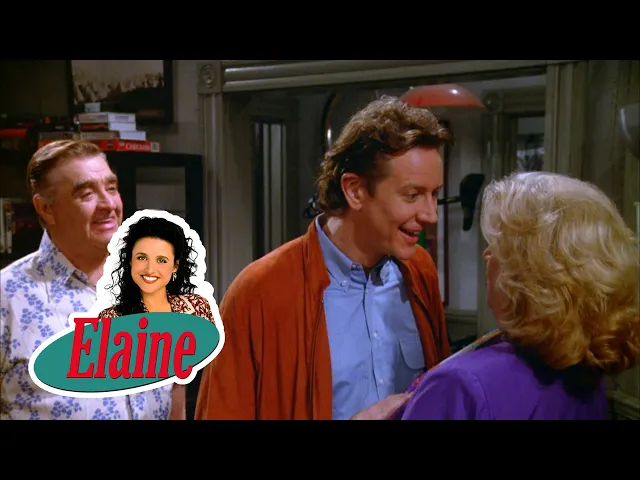
If you watched Seinfeld, you remember the Close Talker. Elaine's super-nice boyfriend Aaron had such a reduced sense of personal space that he made everyone else uncomfortable by how close he got to them.
Well-meaning, but completely unaware. That's the template.
A Same Talker is the brand version of that.
And before you think it's limited to mom-and-pop B2B businesses, pump the brakes. Big or small, almost every business I've ever worked in or with, across any category, has struggled with Same Talking.
But Same Talking isn't a binary thing; it exists on a spectrum. And where you land on it determines whether your brand is generating resistance, indifference, or genuine pull.
Three Tiers. One Honest Assessment.
After years of working with and within hospitality brands, destinations, and experience-driven companies, I've mapped brand communication into three tiers. See if you can find yourself, then we'll take a look at an example.
Tier 1 — Megaphone. The brand talks about itself. Loudly, confidently, and without much interest in whether anyone is listening. Hospitality reimagined. Where luxury meets comfort. Unparalleled service. They're all just versions of the same thing: We're different, trust us.
These are unearnable claims. Things that can only be discovered through experience, never proven in advance.
And here's what nobody tells you about unearnable claims: they don't just fail to persuade. They generate resistance. When people feel pushed, they push back.
Jump to about 3:20 in the clip to see when Kramer meets Aaron. Kramer recoils so violently to the invasion of his personal space, that he falls to the floor.
That recoil is what persuasion theory calls "reactance".
In real life it means: the harder you underline it, the less they believe you.
The van on the Turnpike isn't just ineffective; it's actively working against itself.
Tier 2 — Menu. The brand has done the work. It's listened, understood what guests value, and communicates in terms of genuine benefit. It's accurate, defensible, honest.
It's also dry. You read it and go, "Yeah, that's probably true. I'm kinda interested in that."
A Menu brand informs but rarely moves anyone. You'd consult it, but you wouldn't feel anything particularly compelling about it.
Tier 3 — Magnet. The brand has done everything the Menu brand did... and then handed it to a storyteller to make it magnetic. The insight is real. The emotion is earned. The language pulls people in. You don't need supporting data to feel it, but the data supports the claim. Guests feel it's true because they already know if it's true for you.
Now watch all three play out in a single category:
Megaphone: A theme park could say: We're fun! Our guests love us! Megaphone. Unearnable, self-focused, invisible. (Ironically, there is a regional theme park in Orlando whose marketing line for years has been "It's HUGE!"... while sitting in the shadow of Disney and Universal. Not really believable or persuasive.)
Menu: Now, our same hypothetical theme park, having done the research and discovered something guests care about, might say: Voted #1 Family Theme Park in America. Earned and defensible... but pretty bland.
Magnet: Or it could say: The Happiest Place on Earth. (you may recognize this as Disneyland's longtime tagline) That's a magnet. The insight is real. The claim is defensible. The emotion is immediate. It makes you feel something before you've bought a ticket.
The Uncomfortable Truth
To be fair, many brands aren't living cleanly in one tier. Small and mid-size businesses tend to live in Megaphone, yes. They're sales driven and don't have the time, money, or interest in marketing. They'd be more successful if they got out of this level, but they may not have the resources, knowledge, or inclination to do so.
But even large brands fall prey to Megaphone thinking. They may have a genuine Magnet positioning at a high level: a strong positioning and tagline, a clear purpose, a story worth telling. But the moment they're executing at speed — writing a caption, drafting a promo email, spinning up a campaign brief — they revert. The ad headline may be Magnet (and that is a maybe), but the sales initiatives and content calendars are full-tilt Megaphone.
Here's the data that should make every senior marketer pause.
A 2017 Capgemini study of 125 global companies asked each firm how customer-centric it believed itself to be. Then they asked their actual customers the same question. The largest single segment in the results was 56%. That segment represented companies who believed they were customer-focused, but whose own customers disagreed.
More than half. Across large, sophisticated, well-resourced organizations.
The gap isn't dishonesty, it's distance. The people making communication decisions are often the furthest from the people receiving them. Jeff Bezos, founder and executive chairman of Amazon, understood this so acutely that he kept an empty chair at every meeting at Amazon HQ. That chair, he said, represented "the most important person in the room": the customer, who almost never had a seat at the table.
Most brands forget to pull up that chair.
The Diagnostic
Before you write the next caption, headline, campaign line, or van wrap run it through these three questions:
Does this describe who we are or what our guest gets?
Would our guest find this useful or would they find it moving?
Does this make our guest feel understood or just informed?
Use these as a quick audit on work you've already made. Use them as a filter before you start new work. Either way, be as brutally honest as you can. Most brands discover that a lot of what they've been saying answers the first question adequately and the third question barely at all.
The climb from Megaphone to Menu is a mindset shift. It means caring more about what your guest thinks than what you want to say. That shift alone gets you somewhere real. Menu brands are at least moving toward customer-centricity.
But Menu isn't where connection lives.
Connection lives in Magnet. And getting to Magnet is where craft and risk and creativity come in: emotion, storytelling, the specific human details that makes someone feel seen rather than targeted.
Assertions repel, benefits inform, stories attract.
The Invitation
The van on the Turnpike might belong to a great company. They might show up on time, charge fairly, and treat every customer like family. The hotel that has "reimagined hospitality" really might have. And maybe that restaurant really is a "best kept secret."
But your guests are making their judgements on your brand going (metaphorically) 70 miles an hour. They're not malicious, they're just efficient. They're scanning, deciding, and moving on. And what you say in that moment either pulls them in or pushes them away.
The distance between where you are and where you want to be might just be three questions away.


" height="72px" id="As_jgmCUW" transform="translate(-0.001 0.003)" width="72px"/></svg>)
" height="71.73647956215527px" id="km4y7GHd3" width="72px"/><path d="M 30.221 33.674 L 32.241 22.673 L 20.482 22.673 L 20.482 18.782 C 20.482 12.969 22.763 10.732 28.666 10.732 C 30.499 10.732 31.975 10.777 32.824 10.866 L 32.824 0.894 C 31.214 0.446 27.279 0 24.998 0 C 12.968 0 7.423 5.679 7.423 17.932 L 7.423 22.673 L 0 22.673 L 0 33.674 L 7.423 33.674 L 7.423 57.613 C 10.208 58.304 13.121 58.673 16.119 58.673 C 17.595 58.673 19.051 58.582 20.481 58.409 L 20.481 33.674 L 30.219 33.674 Z" fill="transparent" height="58.672799641889654px" id="BI79sF67h" transform="translate(19.879 13.327)" width="32.8241435171297px"/></g></svg>)
" height="72px" id="DUZD5ns98" width="72px"/></svg>)